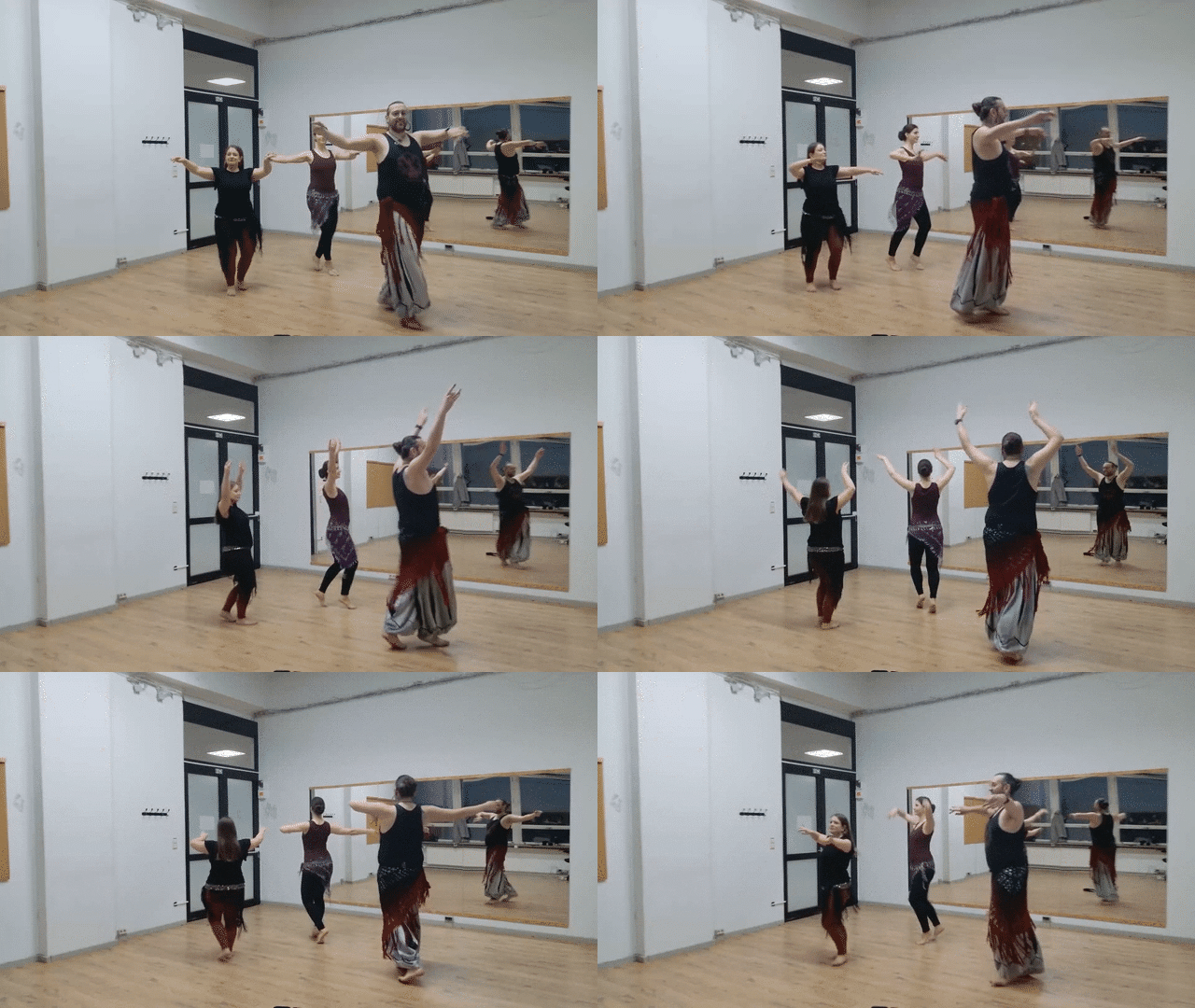

In FatChanceBellyDance®Style (ATS®), our Turkish Shimmy is also known as the Forward and Back Shimmy. The updated name references the forward and back foot pattern associated with this step.
This foot pattern is typical in Turkish Style Bellydance.
We learned from Serkan that in Egypt, they call this foot pattern the Turkish step, but in Turkey, they call it the Romani Walk.
The arms of our standard Turkish Shimmy are more elevated than is traditional in Turkish style, but like most of our steps, it was adapted to work with the aesthetic of our uplifted posture.
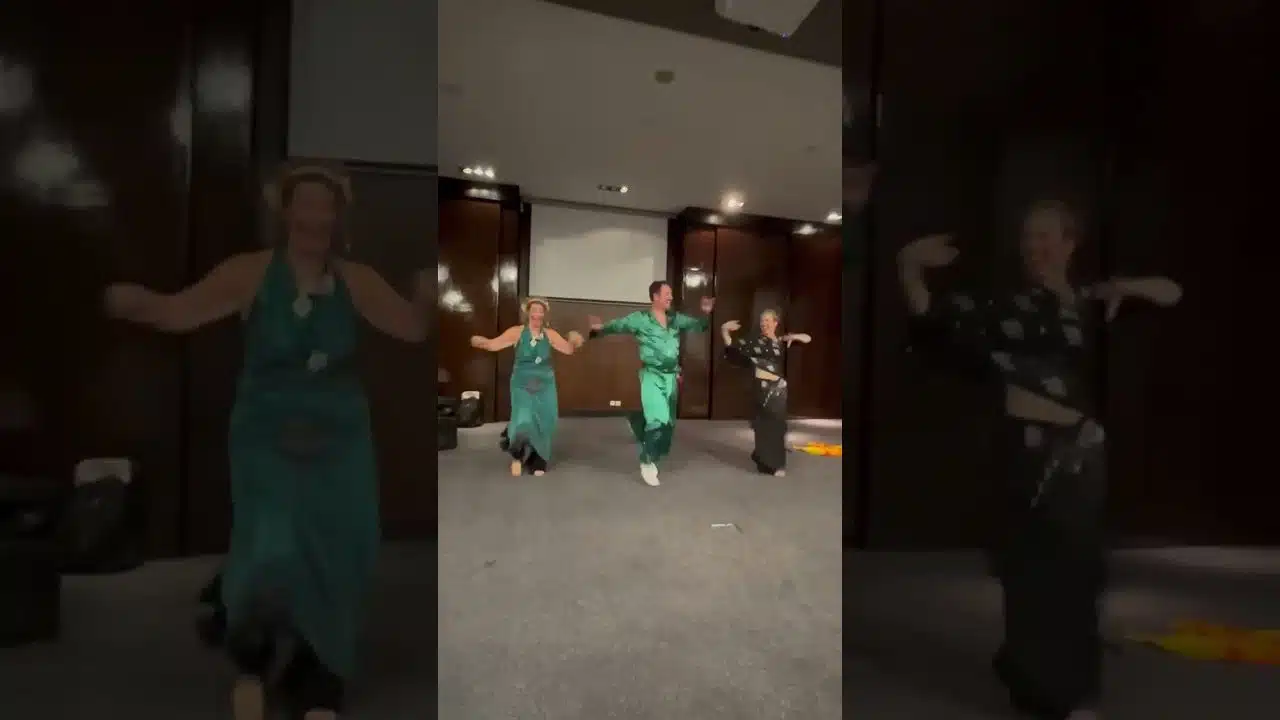
I’m in love with this little clip of Diedre of Global Caravan, Serkan, and myself improvising a little Turkish style after a hafla in Morocco last year. You can see Serkan look over at me and say, “Turkish,” and we all bust out into the Turkish Shimmy.
You can see the arm difference in the video. While his arms still move side to side, they are in what he calls “neutral,” while ours are at shoulder height. Our version takes the arms to the right and back to center, though I adapted them a bit here to match Serkan’s.
Interestingly, the quarter turns with the forward and back foot pattern are also part of Turkish Style Bellydance, as are the arm patterns we use in our TSWAAT arms.
Here are five more fun facts about elements in Turkish Style that we also have in FCBD® Style:
- Shimmying on the balls of the feet simulates the high heels that are a staple in Turkish Style
- Shimmies come from the hips, as opposed to the knees like in other bellydance styles
- Elbows never point to the ground even with the arms more relaxed
- Movements are energetic and rhythmic
- Zils!
So how did the Turkish Shimmy make it into FCBD® Style?
Carolena was inspired by a class she took with Aisha Ali and adapted it to fit the style, with variations of the movement evolving with the different troupes over the years.
It’s that simple, really. We have so many similarities that the fusion works beautifully.
What I love most about tracing these roots is the reminder that we are all connected.
Borrowing, adapting, and transforming across cultures and generations is what our ancestors did as they migrated and immigrated over the centuries. And every time we shimmy across the floor together, we’re part of that lineage too. Respectfully, of course.
Turkish Style Bellydance has a direct influence on FatChanceBellyDance®Style. I feel that connection now more than ever and have no doubt this will impact the energy, appreciation, and love of this movement. It will definitely enrich how I pass this lineage on to our future generations.
Always learning, always growing. This is the beauty of dance.
What is your favorite Turkish Shimmy variation and why??